
Article language
Original article in English
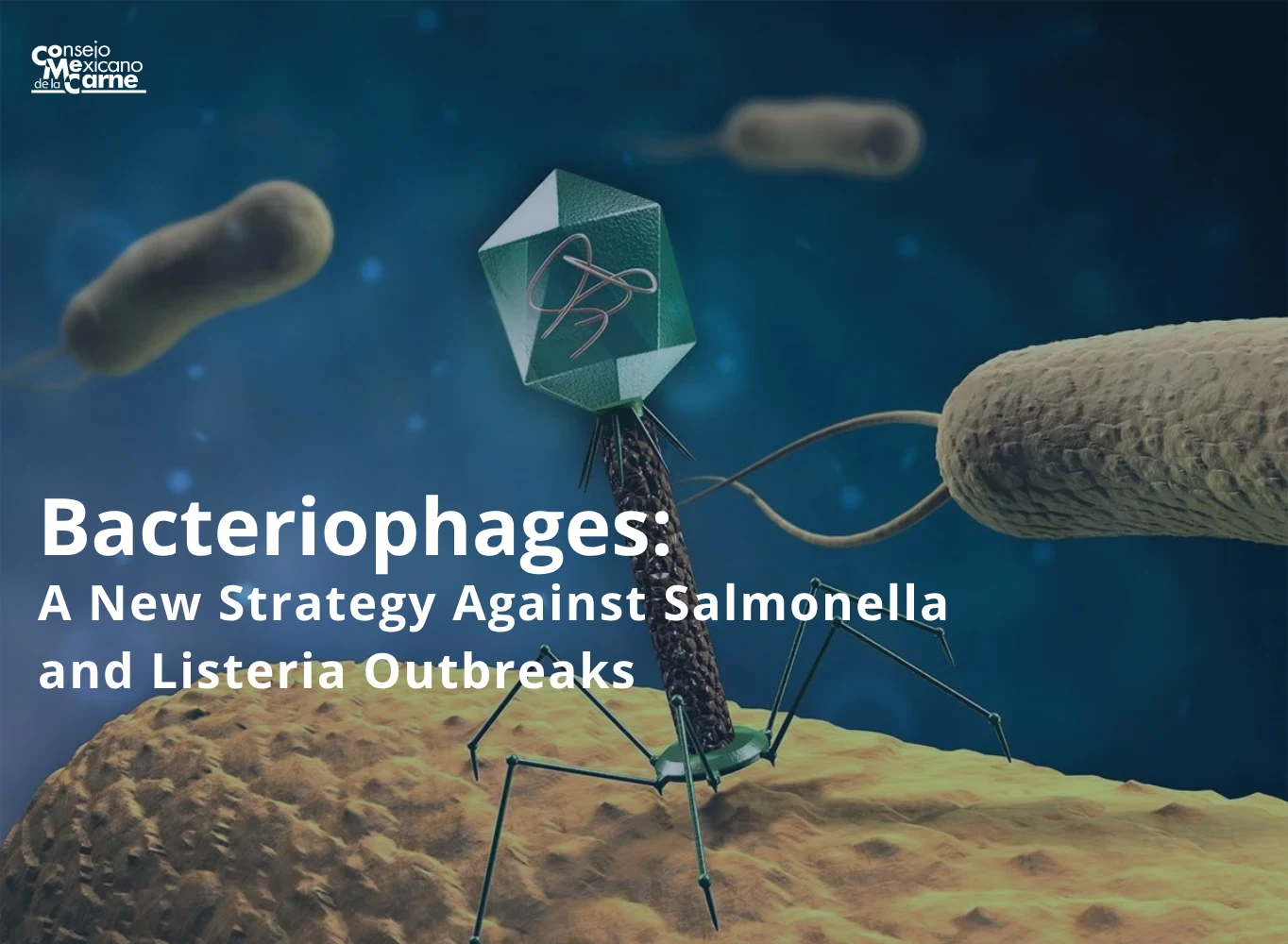
Newmarket, Ontario — September 3, 2026. Recent outbreaks of foodborne illnesses have once again brought attention to the strategies used by the food industry to control microorganisms such as Salmonella and Listeria. In this context, Canadian company SK8 Biotechnologies is proposing the incorporation of bacteriophages as an additional layer within food safety programs.
During 2026, outbreaks and product recalls related to different foods, including eggs, fresh produce, dairy products and sprouts, have been reported. In July, a multistate outbreak of Salmonella Enteritidis associated with shell eggs affected 98 people in 17 states and resulted in the recall of more than 1.5 million dozen eggs. A month later, Salmonella Javiana detected in fresh jalapeños caused new recalls throughout the foodservice supply chain.
According to SK8 Biotechnologies, these incidents highlight a limitation of conventional pathogen-control methods. The company states that the facilities involved already had measures such as sanitation programs, HACCP plans and environmental monitoring in place.
“Every one of these outbreaks happened at facilities that had a sanitation program, a HACCP plan and an environmental monitoring schedule,” explained Tyler Stephens, Chief Scientific Officer at SK8 Biotechnologies. According to the researcher, these measures remain necessary but may not be sufficient against certain strains of Salmonella.
What Are Bacteriophages?
Bacteriophages, also known as phages, are microbes that specifically infect certain bacteria. Unlike some broad-spectrum antimicrobials, phages can be designed or selected to act against specific bacteria without necessarily affecting other microorganisms.
This characteristic is particularly relevant to certain food-processing operations. According to SK8 Biotech, its products are designed to be used as processing aids at specific points in the production process and can be applied at refrigeration temperatures.
The company also states that phages targeting Salmonella and Listeria can control those pathogens while leaving starter cultures and beneficial microorganisms intact, something that could be important in fermented or cultured foods. Once the bacteria that serve as hosts disappear, the phage population decreases.
The proposal, therefore, is not to replace traditional food safety systems, but to add a specific intervention against certain pathogens.
Three Lines of Development
SK8 Biotechnologies is currently working with different bacteriophage-based products:
- VAM-S, targeting Salmonella and intended for applications involving poultry, eggs and food processing. The product is associated with a GRAS notice submitted to the U.S. Food and Drug Administration (FDA), identified as GRN 917.
- VAM-L, targeting Listeria monocytogenes and developed for dairy and meat processors. The company states that it is currently awaiting regulatory feedback from the USDA.
- VAM-E, targeting E. coli, which is still in development and being scaled up toward potential commercialization.
Results From a Commercial Trial
The company also released results from a trial conducted during a commercial processing operation. In the trial, treated carcasses received VAM-S through electrostatic spraying, at an approximate concentration of 1 × 10⁸ PFU/mL for 20 seconds.
Afterward, both treated and control samples were rinsed according to FSIS directives, and the resulting rinsates were analyzed by an independent laboratory.
According to results reported by SK8, carcasses in the control group had Salmonella levels ranging from 2.33 to 4.91 log CFU per carcass. In the treated samples, the amount of Salmonella fell below the detectable level, which, according to the company, represented a reduction of at least 2.00 log CFU per carcass.
The complete trial reports were not published and, according to SK8, are available under a non-disclosure agreement.
A Potential Additional Layer of Protection
Kenneth Tan, CEO of SK8 Biotechnologies, said that the incorporation of bacteriophages is not intended to replace chemicals or existing protocols.
“Chemicals still take care of general spoilage bacteria,” he said. From the company's perspective, phages could complement these tools by specifically targeting pathogens such as Salmonella and Listeria.
The proposal reflects a trend toward more targeted control strategies within the food industry. However, the effectiveness of these technologies must be evaluated according to each application, the characteristics of the food, processing conditions and the corresponding regulatory requirements.
Bacteriophages could thus become a complementary tool within food safety systems, although their large-scale adoption will depend both on the available evidence and on their evaluation and approval by regulatory authorities.
About SK8 Biotechnologies Inc.
SK8 Biotechnologies develops bacteriophage-driven food safety solutions for the entire food supply chain, from farmers and processors to retailers. Its phage solutions are processing aids that specifically target and reduce Salmonella, Listeria and E. coli. SK8's collaborative approach is designed so that phage implementation strengthens existing food safety programs while supporting regulatory compliance, processing efficiency and environmental sustainability. The company is headquartered in Newmarket, Ontario, Canada.
Company information
SK8 Biotechnologies Inc. · Newmarket, Ontario, Canada
Jason Ngo, Director of Business Development